Showing posts with label mathematics. Show all posts

Wednesday, 2 October 2013

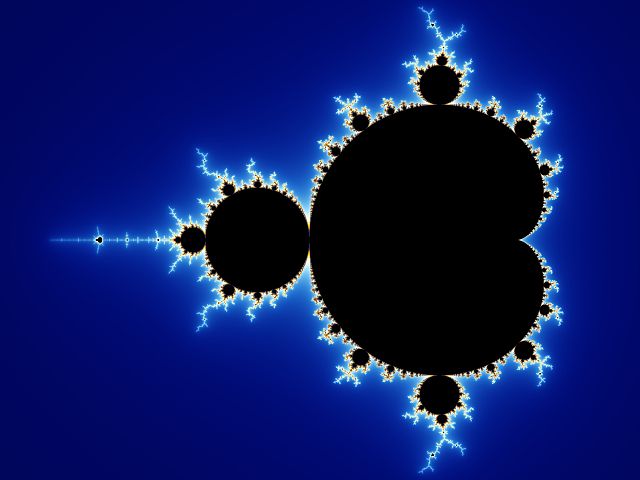
Mathematical Platonism Is True Because it is Useful


I have briefly discussed mathematical Platonism in previous articles. This post is going to contain my current thoughts about it.

Mathematical Platonism is distinct from classic Platonism (so nothing about ideal forms, for instance) and holds that three propositions are true.

1. Mathematical objects exist.
2. Mathematical objects are independent of human beings.
3. Mathematical objects are abstract

Or, in condensed form, mathematical objects exist abstractly and independently of human beings. All possible mathematical objects exist, have always existed and will always exist, even if no mathematician ever ponders them.

In this post, I will argue that while there is no fact of the matter regarding whether mathematical objects exist, it is sensible and useful to treat them as if they do, and that this is enough to justify mathematical Platonism.

Tuesday, 10 September 2013

Dualism is Not a Dirty Word


There are two major flavours of naturalism - methodological naturalism and metaphysical or philosophical naturalism. The former essentially means adopting the attitude that the latter is true as a pragmatic step without actually committing to the view that it is literally so. As such, only metaphysical naturalism is really in need of clarification.

I have already explained on this blog that I am a metaphysical naturalist, and what I think this entails, in particular the distinction between the supernatural and the natural. All too often these are unhelpfully defined simply as antonyms of each other.

To recap briefly on that earlier article, and I think to clarify and expand it in the light of recent thinking on the subject, I propose the following definition:
Naturalism is the view that the physical universe is fundamentally intelligible.
Let's extend this to make a number of other statements which I regard as equivalent or derivable from that basic definition.

(For the purposes of this discussion, a physical phenomenon or effect is an object, event or series of events which could in principle be objectively detected or verified by independent observers.)

In the naturalist view:
  • All physical effects have physical causes
  • All high-level physical phenomena can in principle be described in terms of lower-level physical phenomena
  • The most fundamental, basic level of physical phenomena corresponds to the fundamental laws of physics, which are expressible in terms of mathematics
In my view, this definition rules out libertarian free will, for example, because the decisions of people have physical effects yet libertarians reject any physical, deterministic account of human decision-making.

Most naturalists seem to be physicalists, believing only physical stuff such as matter and energy to exist, and many even think that physicalism is identical to naturalism. It isn't though, and this distrust of the non-physical is partly responsible for an unwarranted contempt for the alternative view - dualism.

Wednesday, 20 February 2013

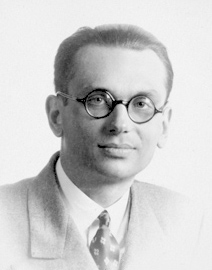
Strong AI: The Gödel Problem

In my previous post, I alluded to an argument made by John Lucas and popularised by Roger Penrose against the possibility of AI, and this is that Gödel's Incompleteness Theorems suggest that even weak AI is impossible. We could never make a computer system that behaved intelligently.

Loosely put, Gödel's Incompleteness Theorems put fundamental limits on what can be achieved by working with formal systems.

In particular, some argue that they show that formal systems can never be as intelligent as human beings. In this post, I argue against this view and propose that humans are subject to the same limitations.


Monday, 23 July 2012

Resolving the impossible lottery

In a previous post, I have posed a question which seems to admit of two contradictory explanations. Go read that post before this one or this post won't make a whole lot of sense!

Sunday, 1 July 2012

Coincidences surprising and inevitable

Kitler photographed by Amy Halligan

Why is it that we might have no problem suspending our disbelief when watching a movie about an alien invasion, but we would find it ridiculous if the writers of a realistic soap opera suddenly started a storyline involving aliens?

This is actually a question that has interested me for some time, even if I seldom gave it much thought.

I will be getting back to the lottery paradox I posed in my last post, but first I have some things to say about the nature of coincidences and improbable events, and this is one of the questions I will attempt to answer.

Wednesday, 27 June 2012

Winning the impossible lottery

Photo: Nick See
I wanted to call this post 'The Lottery Paradox', but it turns out that title is already taken by a very similar idea. The version I'm going to discuss is a bit more extreme and has a different focus.

It is inspired by some thoughts I've been having related to the validity of the Anthropic Principle (the subject of my last post), inspired by the comments left by Callum J Hackett on that post.

Suppose the nation of Foobar has a national lottery, but the way it works is that every single day, one of the citizens is chosen at random to win a big prize.

Now suppose that the nation of Foobar has an arbitarily huge number of citizens (say a Googolplex).

I'm going to try to persuade you to believe two completely opposing conclusions about the possibility of believing that you have won this lottery. One of these conclusions is true, and one of them is false. See if you can tell which is which.

Saturday, 23 June 2012

Thinking of life, the universe and everything


The great hope of physicists such as Stephen Hawking and Lawrence Krauss is that a deep understanding of physical law will ultimately lead to an answer to the ultimate questions. Why are we here? Why does any universe exist at all? Why are the physical laws the way they are? What is the answer to the question of life, the universe and everything?

This question has been bothering me for a long time, ever since I was a small child in fact. When I was taught that we fall because of the force of gravity, I was first confused and then dissatisfied.

I have already discussed why I was confused in an earlier blog post, but essentially it was because it seemed natural to me that anything without support should fall. After all, without support, there's nothing to keep it up! There seemed to be no need to invent some mysterious force called "gravity".

This confusion did not last long. On becoming accustomed to the concept, I could see that it made sense. There is no clear logical reason why something should fall down without support any more than it should fall into the sky if not tied down. Clearly the concept of gravity makes sense.

If only it were not so dissatisfying!

Thursday, 21 June 2012

Super naturalism


Naturalism is a metaphysical proposition assumed by scientists (at least real scientists!) as they go about their work. Naturalism holds that every phenomenon we observe, and every phenomenon we will observe, is a result of natural processes. Even scientists of faith assume this position, limiting their belief in miracles to their private lives. This keeps us from taking supernatural shortcuts in our scientific investigations. We can never simply shrug and say "God did it!".

For most atheists, this proposition is more than an assumption, it is a belief. But what does this belief actually mean? What differentiates the natural from the supernatural?