In this post I will discuss whether the idea of strong emergence can help us to make sense of free will and a few related issues. These ideas have been on my mind lately largely due to the above discussion, but I've been thinking about this for a while.
Showing posts with label metaphysics. Show all posts
Showing posts with label metaphysics. Show all posts
Tuesday, 29 March 2022

Sunday, 15 November 2020
More on Fine-Tuning from Philip Goff
 |
| Philip Goff |
To follow on from my previous post, Philip Goff has now released a preview of an academic paper in progress on this topic. Currently titled "Is the Fine-Tuning Evidence for a Multiverse?", this paper is a defence of the very same Roger White paper I had been critiquing, and the main argument it tackles relates to some points I made.
I thought I should give my take, but before I do I'll note that I'm not sure if the paper preview link may become stale at some future date or if the paper may be revised in ways that make my comments obsolete. In any case, if you're interested, you should read the paper and my previous post if you haven't already.
Wednesday, 24 February 2016
Putnam, Searle and Bishop: The Failure of Physicalist Computationalism
I wanted to come out of blog dormancy to write up my thoughts on what I feel is a very important argument against computationalism. The argument advances the view that there is no objective fact of the matter about which computations a physical system is computing, and if this is the case it would certainly seem to problematise computationalism (the view that what it is to be a conscious mind is just to perform the right kind of computation).
In this post I will explain the argument and some of the common responses to it. I'll reserve my own response (which is quite different from that of most computationalists) for a future post.
Friday, 13 December 2013
The Universe is Made of Mathematics
 |
| Max Tegmark |
Over the course of a few sleepless nights, it all came together and it seemed too make so much sense that I could entertain no doubt: the universe was what I thought of as a "Platonic algorithm".
To my knowledge at the time, this idea had never before been proposed, and a bit of half-hearted searching at the time turned nothing up. I became more convinced of my idea over time and started developing an interest in philosophy so as to learn how to communicate and argue for the idea.
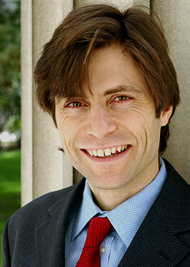
As my research ramped up, I inevitably came across Max Tegmark's Mathematical Universe Hypothesis (MUH), and with a curious mixture of disappointment and vindication realised that it was essentially the same idea.
Nevertheless, Tegmark's idea was still relatively little known, so I decided I would devote some time to building up a rigorous argument with a view to perhaps writing a book on the topic some day. That is actually the single most important reason I started this blog, as many of the arguments I have outlined in my posts will serve to support the MUH.
I have now learned (courtesy of Massimo Pigliucci's blog Rationally Speaking) that Tegmark is in fact about to publish the popular science book that is so sorely needed. I guess I can put aside that ambition for now.
But it's also time for me to put this blog to the use it was originally intended for - enough beating around the bush!
Perhaps my hesitancy to address the subject arises out of the fact that it at first seems completely mad: I am utterly convinced that the universe is made of mathematics and that the concept of physical reality is incoherent.
Now let me try to explain why.
Why the Abstract Feels Physical
I will freely admit that this at first seems like a meaningless platitude to say "the universe is mathematics", akin to statements such as "God is Love". Massimo Pigliucci quite rightly stresses on his recent blog post that we are not claiming that reality is best described by mathematics -- the claim is literally that the fundamental substance of reality is mathematical structure.
As he pointed out, it's hard to see how this can be. How can mathematics possibly explain substance? Abstract concepts such as mathematics are surely entirely different from physical stuff, and to claim the two are the same seems to be perverse.
From Pigliucci's description, Tegmark's answer to this criticism seems rather weak. He insisted that electrons are mathematical objects having mathematical properties, but apparently failed to provide a convincing reason not to regard them as physical objects having physical properties which can be described mathematically. I can see why Pigliucci feared he may have been making a category mistake.
I would take another tack. I would argue that the intuition that mathematics cannot be the stuff of, well, stuff, arises from the false belief that this is a physical universe (and indeed that the physical universe is a concept that even makes sense).
But before I elaborate on this, let me state plainly that I believe the argument in favour of the mathematical universe rests on three crucial premises.
1) All mathematical objects exist abstractly and independently of minds (mathematical Platonism)
2) The mind is a computational process (The Computational Theory of Mind or CTM)
3) The universe behaves according to laws of physics which are expressible mathematically (metaphysical naturalism)
I have made arguments in favour of all of these premises previously on the blog (Platonism, CTM, Naturalism), so for now I am going to assume them to be true.
How can I seriously doubt that the universe is physical? Two powerful analogies help to explain this.
One hypothesis gaining currency in recent years is the idea that the universe is not physical but a computer simulation, as argued rather interestingly by philosopher Nick Bostrom. If Bostrom is right, the physical universe may not exist and the fundamental stuff of the universe could be information, i.e. the bits flowing through a computer program.
Another idea, explored in the book Sophie's World and elsewhere, is the idea that our world may not physically exist because we may be fictional characters living in a fictional world being described by some author. From the point of view of a fictional character, the world seems real, so none of us can really know for sure that we are not such a character.
In both of these ideas, the universe is not real (not physically at any rate), but this fact is forever hidden from us.
The MUH is quite similar in many ways. The crucial difference is that it removes the dependence on a greater reality. Unlike the computer simulation idea, we need no external hardware to support us. Unlike the characters in a novel, we are genuinely conscious. Unlike both, there is no creator, no programmer or author.
We have no need of a programmer or author, no cosmic computer or reader. The bedrock of our existence is mathematical Platonism, and unlike all other explanations this is sufficient as an ultimate cause. Mathematical objects are not created and need nothing to sustain them. They exist necessarily of their own nature.
Let's first consider the idea that the universe is a simulation. If the physics of the universe is computable (as it seems to be), then it could certainly be simulated by a computer of sufficient power, even if such a computer would be unfeasible to construct in this universe. It therefore follows that in principle it is entirely possible that it and we ourselves are simulated, virtual entities (although if you doubt the Computational Theory of Mind then this does not follow as we are evidently conscious).
However all computer programs are mathematical structures, and as such, Platonism holds that all computer programs exist in the abstract. It follows that even if no computer could ever be built to run the simulation of the universe, this program exists as a mathematical structure, and within this structure can be found perfect descriptions of all the objects in our universe, including our minds, our thoughts, etc.
But now, if we start thinking about an abstract mathematical object containing all of our thoughts and inner experiences and determining our life stories, it seems to me that we are getting close to the idea that we may all be characters in a work of fiction.
Unlike fiction, what happens in our universe is determined by mathematical laws and these have the regularities necessary to support life, brains and real intelligence. I don't believe characters in fiction are actually conscious because their actions are not determined by internal genuine thought processes. There is consciousness there, but it is not in the minds of the characters but in that of the writer. In contrast, our consciousness is our own and is the product of our own brains.
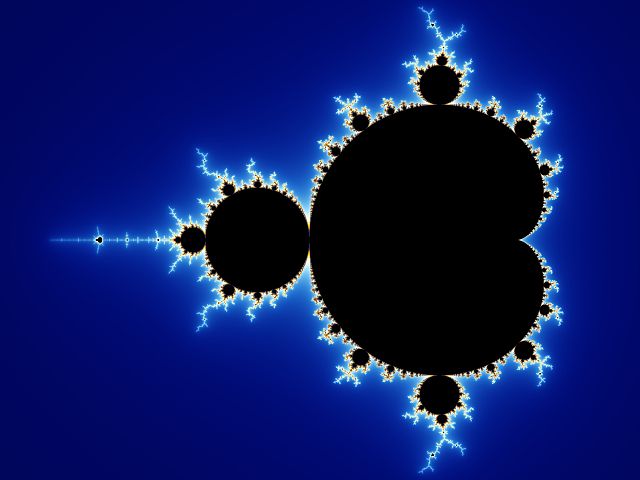
But like the lives of characters in a novel, our lives and our thoughts are all mapped out and there for the reading. We are implicit in the structure of this mathematical object, and in principle our stories could be discovered by simulating it on a powerful computer. This is just like the way we can explore mathematical objects such as the Mandelbrot set with computers.
We are the conscious characters in a cosmic narrative determined by no author but the laws of physics. Our lives exist even if no simulation is run, just as the stories of fictional characters continue to exist even while nobody is reading the novel and just as the Mandelbrot set has always existed, even before it was discovered.
So think of our universe and our life stories as being something like an enormous fractal structure arising from some simple mathematical rules. It's a beautiful, amazing, complex, surprising thing, but it needs no creator or sustainer.
The Incoherence of the Physical Universe Hypothesis
Far more than being merely a plausible account of reality, I view the Mathematical Universe Hypothesis as being necessarily true, because it reveals the incoherence of the concept of a physical universe.
Given that the universe obeys mathematical physical laws (naturalism), there must be a mathematical object (given Platonism) which perfectly describes the universe and which contains within it structures analogous to all objects within the universe, including ourselves.
What's more, given the computational theory of mind, those structures corresponding to our minds are necessarily conscious. As such, even if there is such thing as a real, physical universe, there must also be an isomorphic (having precisely the same form or structure) abstract non-physical universe. There is a physical you and an abstract you, and both have exactly the same experiences and neither has any way of knowing which universe they find themselves in.
In fact, there is no observer anywhere who can distinguish between the physical and the abstract universes. There is nothing we can say about the physical universe that is not also true about the abstract universe, except for the fact that it is physical.
So let's unpack that. What does physical mean? In everyday speech, it is used to distinguish between objects we can interact with directly (such as rocks) and objects we can only think about and discuss (such as numbers). For something to be physical it must be present at some time and place within the universe, and for something to be abstract it must exist outside of space and time.
So what do we mean when we claim that a universe is physical? It exists in time and space? But it doesn't -- it contains time and space within it.
Ok, so let's say that the universe is a special case, that it is physical not because it is inside spacetime but because it contains spacetime.
So now let's consider a hypothetical abstract universe other than our own and ask ourselves whether it is physical. (For illustrative purposes let's say that universe is Star Wars but let's assume that the universe is not a work of fiction but a mathematical object in much the same way that I'm claiming that our universe is a mathematical object).
This universe is not present within the spacetime of our universe, so from that point of view it is not physical. It does contain its own spacetime, so by our broader definition that would make it physical.
But it's just a made-up universe! Our instinct is that it ought not to be considered physical. So let's say that only universes which contain the spacetime of our own universe are physical.
So now, only our own universe can be physical, by definition. This seems to be a rather unsatisfactory result, because there are very good reasons (such as the anthropic principle) to believe there may be other universes. We want that option to be open to us, if only so we can discuss the possibility.
It's also a patently subjective definition of physical. From the point of view of an observer in this universe, the Star Wars universe is not physical. But from the point of view of Han Solo, our universe is not real.
It seems to me that the only way out of this mess is to realise that the application of the concept of physicality to a universe is a category mistake. Physicality as a concept only makes sense within the context of a given universe.
For example, you would no doubt regard yourself as physical but Luke Skywalker as abstract. However, Luke Skywalker is physical to Han Solo, while Han would consider you to be non-existent. There is no objective, universe-agnostic way to say that you are really physical but Luke Skywalker is not.
So given that physicality as applied to universes seems to be incoherent, and given that physicality is the only (completely undetectable) property that distinguishes the mathematical universe from the physical universe, it seems to me that the only sensible conclusion is that only the mathematical version of our universe exists. This accounts for the existence of the universe, fine-tuning and everything we observe.
The Physical Universe Hypothesis is therefore unnecessary, redundant and incoherent.
Reasons to Believe
I have explained why I think the Mathematical Universe Hypothesis follows necessarily from naturalism, Platonism and the computational theory of mind, however there are plenty of people who are skeptical of some or all of these propositions. Nevertheless, I think there are independent reasons to find the MUH plausible.
Firstly, and perhaps most importantly, it explains why the universe exists. It does not tell us what caused the Big Bang, or if the Big Bang had a cause at all, but it does explain why there is something rather than nothing, without appeal to a creator or any other unsatisfying ultimate cause. This echoes my rebuttal to the Kalam Cosmological argument.
For a creator God, we are left to ask who created the creator - but if the universe is a mathematical object, it needs no creator (on Platonism at least), so this is a very satisfying answer to that eternal question. It has always existed and will always exist outside of space-time as a mathematical construct.
It also provides a powerful explanation for fine-tuning. As discussed previously, this universe seems to be perfectly calibrated to support life. Much attention in discussions of fine tuning is focused on the physical constants such as the charge of the electron or the speed of light, etc, but very rarely is it asked why are the equations and the laws of physics themselves of the form they are. Why could the universe not be completely different, not just having different constants but having completely unrecognisable physical laws?
If all possible universes exist, then we have our answer. Our universe is fine-tuned because it is one which has the ability to support conscious thought selected from an infinite multitude of mathematical structures, most of which are lifeless.
Better than other multiverse hypotheses, where it is proposed that there might be a great number of universes, the MUH posits that all possible universes exist, not merely a great many. This is actually simpler because, as Tegmark says (and as explained previously on this blog), there are no free parameters. We have no reason to wonder why universe X exists but universe Y does not. If all universes exist, nothing is arbitrary. We have an ultimate explanation of everything.
There's something attractive to me about the idea that all universes exist. After all, what's to stop any given possible universe from existing? It is not subject to the laws of other universes. No law of this universe can prevent another entirely causally disconnected universe from existing. Even if there is a multiverse with its own meta-laws (e.g. the String Theory multiverse), what's to stop another multiverse with different meta-laws from existing? Even without asserting that the universe is made of mathematics, it seems to me to be perfectly sensible to propose that all possible universes exist. Why not?
Finally, the idea that the universe is literally a mathematical object explains what physicist Eugene Wigner called "the unreasonable effectiveness of mathematics" in modelling and predicting the natural world, often leading physicists to empirical discoveries they could not otherwise have made. If the universe really is a mathematical object, it is hardly surprising that mathematics should be effective in describing it.
There are objections to the Mathematical Universe Hypothesis of course, and I intend to return to them in time.
Wednesday, 2 October 2013
Mathematical Platonism Is True Because it is Useful
I have briefly discussed mathematical Platonism in previous articles. This post is going to contain my current thoughts about it.
Mathematical Platonism is distinct from classic Platonism (so nothing about ideal forms, for instance) and holds that three propositions are true.
1. Mathematical objects exist.
2. Mathematical objects are independent of human beings.
3. Mathematical objects are abstract
Or, in condensed form, mathematical objects exist abstractly and independently of human beings. All possible mathematical objects exist, have always existed and will always exist, even if no mathematician ever ponders them.
In this post, I will argue that while there is no fact of the matter regarding whether mathematical objects exist, it is sensible and useful to treat them as if they do, and that this is enough to justify mathematical Platonism.
In this post, I will argue that while there is no fact of the matter regarding whether mathematical objects exist, it is sensible and useful to treat them as if they do, and that this is enough to justify mathematical Platonism.
Tuesday, 10 September 2013
Dualism is Not a Dirty Word
I have already explained on this blog that I am a metaphysical naturalist, and what I think this entails, in particular the distinction between the supernatural and the natural. All too often these are unhelpfully defined simply as antonyms of each other.
To recap briefly on that earlier article, and I think to clarify and expand it in the light of recent thinking on the subject, I propose the following definition:
(For the purposes of this discussion, a physical phenomenon or effect is an object, event or series of events which could in principle be objectively detected or verified by independent observers.)
In the naturalist view:
Naturalism is the view that the physical universe is fundamentally intelligible.Let's extend this to make a number of other statements which I regard as equivalent or derivable from that basic definition.
(For the purposes of this discussion, a physical phenomenon or effect is an object, event or series of events which could in principle be objectively detected or verified by independent observers.)
In the naturalist view:
- All physical effects have physical causes
- All high-level physical phenomena can in principle be described in terms of lower-level physical phenomena
- The most fundamental, basic level of physical phenomena corresponds to the fundamental laws of physics, which are expressible in terms of mathematics
In my view, this definition rules out libertarian free will, for example, because the decisions of people have physical effects yet libertarians reject any physical, deterministic account of human decision-making.
Most naturalists seem to be physicalists, believing only physical stuff such as matter and energy to exist, and many even think that physicalism is identical to naturalism. It isn't though, and this distrust of the non-physical is partly responsible for an unwarranted contempt for the alternative view - dualism.
Wednesday, 17 July 2013
Defending The Evolutionary Argument Against Naturalism (EEAN)

As a firm proponent of philosophical naturalism, I do not find the EAAN to be persuasive. However, I feel that Pigliucci has treated the argument unfairly, glossing over the crucial point and picking at irrelevant details.
In this post, I will attempt to defend the argument and present it as persuasively as I can. In a later post, I intend to refute it.
Monday, 28 January 2013
Strong AI: Naturalism and AI
In this article, I want to examine the issues presented by the problem of consciousness when examined from a naturalistic or physicalist point of view. What I present in this article is probably not a knock-down argument proving the computational theory of consciousness (Strong AI) within this framework. Rather it shows that the alternatives are rather problematic.
Monday, 17 December 2012
Strong AI: The Illusion of Real Consciousness
Perhaps we are no more conscious that the automatons we imagine in our thought experiments when considering questions about artificial intelligence and philosophy of mind.
In this view, all we have to explain is why we believe we are conscious, without explaining why we actually are. "Real consciousness" is an illusion, and consciousness is simply comprised of the functions it affords, namely the ability to be self-reflective, to deliberate, to perceive the world, etc., in such a way that the entity believes itself to have a subjective experience or "real consciousness".
If we allow the assumptions of Weak AI, namely that it should be possible in principle to create a computational artificial intelligence which has all the functionality of a human brain, then all of these abilities can be achieved. If we deny Strong AI, then we must suppose that the AI will falsely believe itself to be conscious.
If we understand how artificial intelligences might believe themselves to be conscious, then we can understand by analogy why biological intelligences might share those beliefs. In other words, if we have explained our belief that we are conscious (by analogy to our artificial intelligences), then what, exactly, remains to be explained?
Thursday, 13 December 2012
Strong AI: The Story So Far
Let's take Strong AI as the viewpoint that the essential capabilities of the brain are computational, meaning that were we to reproduce these same computational functions in an artificial machine such as a silicon computer, then that machine would have a mind just as real, just as conscious as a human mind.
In my recent posts, I have argued against some common criticisms of this view.
I have shown how The Chinese Room may establish that a piece of computational hardware cannot become conscious, but it does not show that the software running on that hardware is unconscious.
I have shown that the concept of a philosophical zombie does nothing to cast doubt on Strong AI, for if Strong AI is true then philosophical zombies are probably logically incoherent. Philosophical zombies are nothing more than a restatement of the viewpoint that Strong AI is not true.
I have shown that qualia, with specific reference to Mary's Room, do not in themselves disprove physicalism, but are probably simply brain states which act as labels for certain percepts and concepts.
I have agreed with Alvin Plantinga that the mind and body are distinct entities (like hardware and software), but argue that this is a conclusion of no consequence which no thoughtful person should be surprised by and which does not imply that the soul can survive the destruction of the body.
I have also explained why I disagree with the assertion that semantics cannot be derived from syntax, and sketched how I think semantics can be viewed as a special case of syntax.
What I have not done yet is given some positive reasons for the suspicion that Strong AI is true. In my following posts I will attempt to do so.
Wednesday, 28 November 2012
In Defence of Strong AI: Meta-meaning
Yesterday's post was quite long and wide-ranging, with a lot of examples etc. It focused specifically on how it might be possible to get semantics from syntax, particularly with reference to The Chinese Room thought experiment.
However I feel that I could sum up my position more succinctly by looking at the meaning of the word "meaning" itself.
However I feel that I could sum up my position more succinctly by looking at the meaning of the word "meaning" itself.
Tuesday, 27 November 2012
In Defence of Strong AI: Semantics from Syntax

If it were impossible to get semantics (meaning) from syntax (symbols and formal rules for manipulating them) then we probably wouldn't have bothered broadcasting the Arecibo image to the universe in the hope of communicating with aliens.
Without any way to explain the meaning of this image, it seems to consist of syntax alone. Whether it could be deciphered by aliens in practice or not, it at least seems possible in principle, which seems to suggest that it may be possible in some cases to derive semantics from syntax.
The assertion that you can't, that there is no way to get from syntax to semantics, is perhaps the strongest response from John Searle to the systems/virtual mind refutation of his Chinese Room thought experiment (as outlined in my post on the topic).
Searle illustrates his point by saying that if he is in The Chinese Room and has a formal system of rules (syntax) for manipulating Chinese words, he has no way to get from this syntax to the semantics of what is being said. If he has no way to do this, then how can the system do it?
In Searle's view, the systems/virtual mind reply to the Chinese Room is just hand-waving until this is explained.
Let's see if I can attempt to do just that.
Tuesday, 20 November 2012
In Defence of Strong AI: The Modal Argument Refuted
In this video, philosopher and Christain theologian Alvin Plantinga outlines his modal argument, which in my view successfully establishes that he is not identical with his brain or body.
He interprets this to mean that he is something more than physical, and presumably that he has a soul. Physicalism refuted? Nope!
In Defence of Strong AI: Qualia and Mary's Room
 |
| Photo: brokenview |
The Mary's Room thought experiment considers a brilliant neuroscientist who has been raised and educated in an entirely colourless environment. It was originally proposed by Frank Jackson as follows:
Mary is a brilliant scientist who is, for whatever reason, forced to investigate the world from a black and white room via a black and white television monitor. She specializes in the neurophysiology of vision and acquires, let us suppose, all the physical information there is to obtain about what goes on when we see ripe tomatoes, or the sky, and use terms like ‘red’, ‘blue’, and so on. She discovers, for example, just which wavelength combinations from the sky stimulate the retina, and exactly how this produces via the central nervous system the contraction of the vocal cords and expulsion of air from the lungs that results in the uttering of the sentence ‘The sky is blue’. [...] What will happen when Mary is released from her black and white room or is given a color television monitor? Will she learn anything or not?
On the day she is allowed to emerge from her confinement, she sees the colourful world for the first time. "Wow!" she says, as she takes it all in. Though she knew everything there was to know about the human brain and everything there was to know about the physics of colour, she had never before known what it was like to experience it first-hand.
But if she now knows something she didn't know before, then evidently she could not have known everything there was to know about colour before her escape. This surely proves that conscious experience transcends physics and neuroscience. Physicalism (the belief that everything is the result of physical interactions) must simply be wrong. Right?
Well, not really...
Tuesday, 6 November 2012
In Defence of Strong AI: Philosophical Zombies Refuted
One concept that often comes up in discussions about consciousness and strong AI is that of the philosophical zombie.
Generally, a philosophical zombie is something which looks like and behaves like a human being, but has no conscious experience of the world. It may deceive us by protesting that it is conscious and claiming that it does feel pain and experience sensations just as we do, but it is just an automaton mimicking a real sentient being. It is no more aware than a character in a novel or a two-line computer program that prints to the screen the message "Hello World! (I'm conscious, by the way)".
Opponents of strong AI will often bring up the idea of a philosophical zombie to illustrate that it is conceivable that something can behave as though it were conscious while actually having no inner experiences whatsoever. David Chalmers, in The Conscious Mind, discusses the idea of an entire world, perhaps indistinguishable from our own, which is populated entirely by philosophical zombies.
While those who bring up the concept may not claim that philosophical zombies are possible in this universe, they do maintain that the concept is at least logically possible or coherent. I disagree.
Generally, a philosophical zombie is something which looks like and behaves like a human being, but has no conscious experience of the world. It may deceive us by protesting that it is conscious and claiming that it does feel pain and experience sensations just as we do, but it is just an automaton mimicking a real sentient being. It is no more aware than a character in a novel or a two-line computer program that prints to the screen the message "Hello World! (I'm conscious, by the way)".
Opponents of strong AI will often bring up the idea of a philosophical zombie to illustrate that it is conceivable that something can behave as though it were conscious while actually having no inner experiences whatsoever. David Chalmers, in The Conscious Mind, discusses the idea of an entire world, perhaps indistinguishable from our own, which is populated entirely by philosophical zombies.
While those who bring up the concept may not claim that philosophical zombies are possible in this universe, they do maintain that the concept is at least logically possible or coherent. I disagree.
Saturday, 23 June 2012
The anthropic principle goes wild
I want to raise the subject because the anthropic principle is exactly the kind of logical or philosophical argument that might have a bearing on the fundamental existential questions I mentioned in my last post.
The anthropic principle is a simple but profound idea that at first sounds like a useless tautology. It explains that we shouldn't be too surprised to find ourselves in an environment that is so well suited to us, because if our environment were not as it is then we would not be as we are.
To paraphrase Douglas Adams: to marvel at the many wonderful and hospitable aspects of our world that enable our existence is like a sentient puddle being impressed with how well its pothole fits its shape.
The anthropic principle explains why the earth is positioned in the narrow band of space at just the right distance from the sun to allow liquid water to exist. It explains how life can have come into existence despite the long odds of its arising by chance. It explains how this life can have evolved into intelligent self-reflective creatures such as ourselves.
Thinking of life, the universe and everything

The great hope of physicists such as Stephen Hawking and Lawrence Krauss is that a deep understanding of physical law will ultimately lead to an answer to the ultimate questions. Why are we here? Why does any universe exist at all? Why are the physical laws the way they are? What is the answer to the question of life, the universe and everything?
This question has been bothering me for a long time, ever since I was a small child in fact. When I was taught that we fall because of the force of gravity, I was first confused and then dissatisfied.
I have already discussed why I was confused in an earlier blog post, but essentially it was because it seemed natural to me that anything without support should fall. After all, without support, there's nothing to keep it up! There seemed to be no need to invent some mysterious force called "gravity".
This confusion did not last long. On becoming accustomed to the concept, I could see that it made sense. There is no clear logical reason why something should fall down without support any more than it should fall into the sky if not tied down. Clearly the concept of gravity makes sense.
If only it were not so dissatisfying!
Thursday, 21 June 2012
Super naturalism
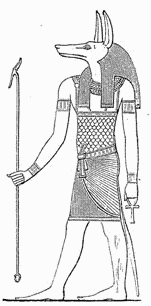
Naturalism is a metaphysical proposition assumed by scientists (at least real scientists!) as they go about their work. Naturalism holds that every phenomenon we observe, and every phenomenon we will observe, is a result of natural processes. Even scientists of faith assume this position, limiting their belief in miracles to their private lives. This keeps us from taking supernatural shortcuts in our scientific investigations. We can never simply shrug and say "God did it!".
For most atheists, this proposition is more than an assumption, it is a belief. But what does this belief actually mean? What differentiates the natural from the supernatural?
Sunday, 13 May 2012
Something from nothing: Competing premises
In my previous post, I discussed how Dr. Carrier's argument that the universe could come into existence from nothing is cogent only if you choose to assume that anything can happen in preference to assuming that there is no dimension of time in a state of absolute nothingness.
My own viewpoint is that absolute nothingness does in fact imply a lack of a time dimension, and so Carrier's argument does not hold. So how can we choose which is the better description of absolute nothingness? In this post, I will argue for my position.
Tuesday, 8 May 2012
Something from nothing: Flavours of singularity
One of the ways Dr. Richard Carrier defends his contention that time can arise from a state of absolute nothingness is by giving one example where this may have happened: the singularity at the origin of our universe.

In this post, I will attempt to refute this by arguing that this singularity was not really a state of absolute nothingness at all.
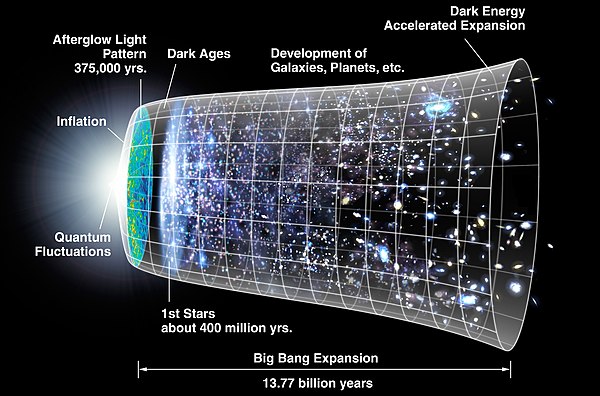
In this post, I will attempt to refute this by arguing that this singularity was not really a state of absolute nothingness at all.
Subscribe to:
Posts (Atom)