Showing posts with label philosophy. Show all posts

Tuesday, 9 May 2023

A Multi-Level view of LLM Intentionality

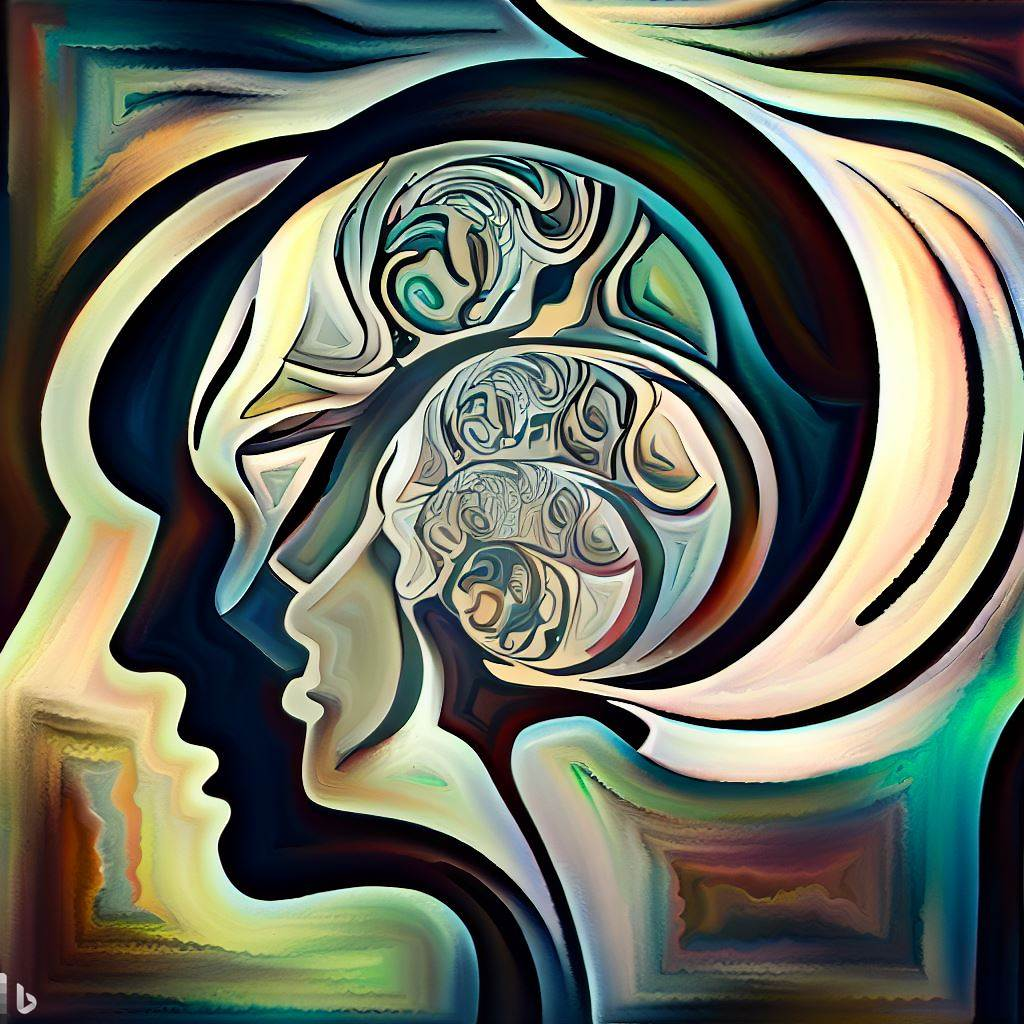
Bing AI's interpretation of a mind within a mind within a mind

Prompted by Keith Frankish's recent streamed discussion of LLM intentionality on YouTube, there's a particular idea I wanted to share which I'm not sure is widely enough appreciated but which I think gives a valuable perspective from which to think about LLMs and what kinds of intentions they may have. This is not an original idea of my own -- at least some of my thinking on this was sparked by reading about the Waluigi problem on LessWrong.

In this post, I'm going to be making the case that LLMs might have intentionality much like ours, but please understand that I'm making a point in principle and not so much arguing for the capabilities of current LLMs, which are probably not there yet. I'm going to be talking about what scope there is to give the benefit of the doubt to arbitrarily competent future LLMs, albeit ones that follow more or less the same paradigms as those of today. I'm going to try to undermine some proposed reasons for skepticism about the intentions or understanding of LLMs, not because I think the conclusions are wrong but because I think the arguments are too weak to support them.

I should also note that I will follow Keith (and Daniel Dennett, and others) in assuming an interpretivist account of intentions. That is, we should ascribe intentions to a system if and only if it helps to predict and explain the behaviour of the system. Whether it *really* has intentions beyond this is not a question I am attempting to answer (and I think that it is probably not determinate in any case).

The basic idea I want to introduce is that LLMs might have intentions and agency on multiple levels, so we may be missing something if we restrict our analysis to one level alone.

Sunday, 12 February 2023

Psychophysical Harmony

I wanted to write about the argument from psychophysical harmony against naturalism, even though it has no force for those like me who think that talk of qualia and phenomenality in general is confused. For the argument to make any sense at all, we will first have to assume that such considerations as the Knowledge Argument (i.e. the Mary's Room thought experiment from Frank Jackson) have persuaded us that physicalism is inadequate for the task of accounting for phenomenal experience. The argument from psychophysical harmony then goes farther, suggesting that there cannot be any sort of neutral natural explanation at all for the mysterious appropriateness of our experience in representing the physical world. Instead we might need to invoke God, or if not God then perhaps some other benevolent purposeful force or principle such as John Leslie's axiarchism.

Thursday, 16 December 2021

The Computer Metaphor

Is the brain actually a computer? Or is this a metaphor or analogy which is often taken too literally? This issue has come up a few times in the past couple of years, and I wanted to give my take because some common responses do not seem right to me.

I'm going to argue the brain really is literally a computer and that this is not a metaphor or analogy at all. Many of the experts who disagree with this are neuroscientists, biologists and philosophers. We have much to learn from them about how the brain works, but that's not the only issue. To answer the question of whether a brain is a computer we also need to consider what a computer is, and I feel this side of the equation is too often neglected.

Friday, 6 November 2020

On Fine-Tuning and the Multiverse

The Fine-Tuning Problem


I've been thinking a lot lately about the problem of fine-tuning and how it may or may not be resolved by appeal to a multiverse. This has been prompted by recent correspondence with the philosopher Philip Goff and by the book I am currently reading, The Beginning of Infinity by David Deutsch. I hope to get around to discussing Deutsch's ideas in future, but for now I'm focusing on an argument put forth by Roger White and endorsed by Goff.

The fine-tuning problem is just that the laws of physics describing the universe seem to be fine-tuned so as to allow life to exist. While trying not to be too parochial in our assumptions about what life requires to exist, at least in a universe even vaguely like ours, it seems reasonable to assume that it must at least have time and a stable environment in which to evolve, access to sources of energy and a varied assortment of building blocks from which to assemble itself.

But if the physical constants were slightly different, then perhaps stars, heavier elements or atoms could not have formed. Perhaps the universe would never have expanded from its initial hot, dense state, or would have recollapsed too quickly, or perhaps it would have expanded too quickly for particles to come together at all. When we say the universe appears to be fine-tuned, we are claiming that it appears to be delicately balanced so as to allow complex evolving self-replicators (i.e. life) to exist -- that almost any tweak we imagine to the constants or the laws of physics would result in a simpler, lifeless universe. This curious observation seems to demand an explanation.

Wednesday, 24 February 2016

Putnam, Searle and Bishop: The Failure of Physicalist Computationalism


I wanted to come out of blog dormancy to write up my thoughts on what I feel is a very important argument against computationalism. The argument advances the view that there is no objective fact of the matter about which computations a physical system is computing, and if this is the case it would certainly seem to problematise computationalism (the view that what it is to be a conscious mind is just to perform the right kind of computation).

In this post I will explain the argument and some of the common responses to it. I'll reserve my own response (which is quite different from that of most computationalists) for a future post.

Monday, 9 June 2014

Book Review: Longing to Know

As a pretty convinced atheist, I am not the target audience for Longing to Know, by Esther Lightcap Meek, which seeks to explain a view of knowledge in general, but in particular of how we might come to know God. When it was nominated for discussion by my philosophy reading group, I hoped that I would at least get some interesting discussion of epistemology out of it, and to an extent I did, but my experience of the book could be more broadly characterised by frustration and a Longing to Go (away and do something else).


Thursday, 1 May 2014

The Ontological Argument

A frustrating interruption of Internet service has rendered me unable to work, so I might as well put my time to good use by catching up on blogging on the assumption that I will be able to upload this text at some later time. It also means, unfortunately, that I am unable to use references as I write. As such, I might get some things wrong.

The issue I want to address is the so-called Ontological Argument for the existence of God as first proposed by St. Anselm almost a thousand yeasrs go and further developed and promoted by Muslim and Christian philosophers, including relatively recent versions by Alvin Plantinga, Kurt Gödel and others.

I was asked to write about this some time ago by a fellow commenter on Massimo Pigliucci's (now no longer active) blog 'Rationally Speaking', and I said I would. However I have been slow to do so for a couple of reasons (in addition to the usual procrastination!). The first is that the argument is so obviously nutty that it seems to be scarcely worth the time to address it. The second is that it is actually quite difficult to point out precisely what is wrong with it!

Tuesday, 15 April 2014

The Moral Landscape Challenge

This is my entry to Sam Harris's Moral Landscape Challenge. Needless to say, it didn't win, but I'm reasonably happy with it nonetheless.


The Moral Landscape (TML) is engagingly written and cleverly argued. Harris starts with the assumption that morality concerns maximising the well-being of conscious creatures (let’s call this Harris’s axiom). Much of what follows is laudable, but there are unavoidable philosophical problems with the notion that science can determine human values. Yes, science can in principle give us answers we can use to improve the human condition. Fully embracing Harris’s axiom, this is the application of science to standard consequentialism and subject to all the same philosophical criticisms.

It is also a relatively trivial idea, and hardly new. If we are to take TML seriously, we must assume it makes a more profound claim: that there are usually objectively correct answers to moral dilemmas and that science can find them.

Friday, 13 December 2013

The Universe is Made of Mathematics

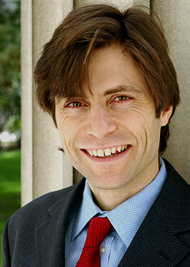
Max Tegmark
A couple of years ago I was reading Anathem by Neal Stephenson and a number of ideas started to click into place for me. Without going into the novel too much (spoilers), it prompted me to think about the nature of reality and why it might be that the universe exists.

Over the course of a few sleepless nights, it all came together and it seemed too make so much sense that I could entertain no doubt: the universe was what I thought of as a "Platonic algorithm".

To my knowledge at the time, this idea had never before been proposed, and a bit of half-hearted searching at the time turned nothing up. I became more convinced of my idea over time and started developing an interest in philosophy so as to learn how to communicate and argue for the idea.

As my research ramped up, I inevitably came across Max Tegmark's Mathematical Universe Hypothesis (MUH), and with a curious mixture of disappointment and vindication realised that it was essentially the same idea.

Nevertheless, Tegmark's idea was still relatively little known, so I decided I would devote some time to building up a rigorous argument with a view to perhaps writing a book on the topic some day. That is actually the single most important reason I started this blog, as many of the arguments I have outlined in my posts will serve to support the MUH.

I have now learned (courtesy of Massimo Pigliucci's blog Rationally Speaking) that Tegmark is in fact about to publish the popular science book that is so sorely needed. I guess I can put aside that ambition for now.

But it's also time for me to put this blog to the use it was originally intended for - enough beating around the bush!

Perhaps my hesitancy to address the subject arises out of the fact that it at first seems completely mad: I am utterly convinced that the universe is made of mathematics and that the concept of physical reality is incoherent.

Now let me try to explain why.

Why the Abstract Feels Physical

I will freely admit that this at first seems like a meaningless platitude to say "the universe is mathematics", akin to statements such as "God is Love". Massimo Pigliucci quite rightly stresses on his recent blog post that we are not claiming that reality is best described by mathematics -- the claim is literally that the fundamental substance of reality is mathematical structure.

As he pointed out, it's hard to see how this can be. How can mathematics possibly explain substance? Abstract concepts such as mathematics are surely entirely different from physical stuff, and to claim the two are the same seems to be perverse.

From Pigliucci's description, Tegmark's answer to this criticism seems rather weak. He insisted that electrons are mathematical objects having mathematical properties, but apparently failed to provide a convincing reason not to regard them as physical objects having physical properties which can be described mathematically. I can see why Pigliucci feared he may have been making a category mistake.

I would take another tack. I would argue that the intuition that mathematics cannot be the stuff of, well, stuff, arises from the false belief that this is a physical universe (and indeed that the physical universe is a concept that even makes sense).

But before I elaborate on this, let me state plainly that I believe the argument in favour of the mathematical universe rests on three crucial premises.

1) All mathematical objects exist abstractly and independently of minds (mathematical Platonism)
2) The mind is a computational process (The Computational Theory of Mind or CTM)
3) The universe behaves according to laws of physics which are expressible mathematically (metaphysical naturalism)

I have made arguments in favour of all of these premises previously on the blog (Platonism, CTM, Naturalism), so for now I am going to assume them to be true.

How can I seriously doubt that the universe is physical? Two powerful analogies help to explain this.

One hypothesis gaining currency in recent years is the idea that the universe is not physical but a computer simulation, as argued rather interestingly by philosopher Nick Bostrom. If Bostrom is right, the physical universe may not exist and the fundamental stuff of the universe could be information, i.e. the bits flowing through a computer program.

Another idea, explored in the book Sophie's World and elsewhere, is the idea that our world may not physically exist because we may be fictional characters living in a fictional world being described by some author. From the point of view of a fictional character, the world seems real, so none of us can really know for sure that we are not such a character.

In both of these ideas, the universe is not real (not physically at any rate), but this fact is forever hidden from us.

The MUH is quite similar in many ways. The crucial difference is that it removes the dependence on a greater reality. Unlike the computer simulation idea, we need no external hardware to support us. Unlike the characters in a novel, we are genuinely conscious. Unlike both, there is no creator, no programmer or author.

We have no need of a programmer or author, no cosmic computer or reader. The bedrock of our existence is mathematical Platonism, and unlike all other explanations this is sufficient as an ultimate cause. Mathematical objects are not created and need nothing to sustain them. They exist necessarily of their own nature.

Let's first consider the idea that the universe is a simulation. If the physics of the universe is computable (as it seems to be), then it could certainly be simulated by a computer of sufficient power, even if such a computer would be unfeasible to construct in this universe. It therefore follows that in principle it is entirely possible that it and we ourselves are simulated, virtual entities (although if you doubt the Computational Theory of Mind then this does not follow as we are evidently conscious).

However all computer programs are mathematical structures, and as such, Platonism holds that all computer programs exist in the abstract. It follows that even if no computer could ever be built to run the simulation of the universe, this program exists as a mathematical structure, and within this structure can be found perfect descriptions of all the objects in our universe, including our minds, our thoughts, etc.

But now, if we start thinking about an abstract mathematical object containing all of our thoughts and inner experiences and determining our life stories, it seems to me that we are getting close to the idea that we may all be characters in a work of fiction.

Unlike fiction, what happens in our universe is determined by mathematical laws and these have the regularities necessary to support life, brains and real intelligence. I don't believe characters in fiction are actually conscious because their actions are not determined by internal genuine thought processes. There is consciousness there, but it is not in the minds of the characters but in that of the writer. In contrast, our consciousness is our own and is the product of our own brains.

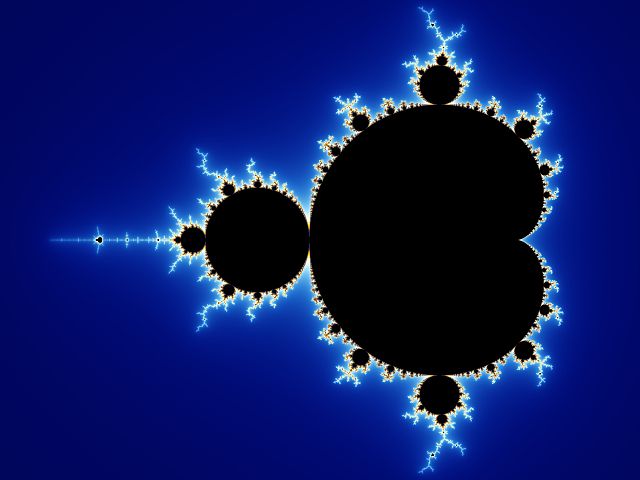
But like the lives of characters in a novel, our lives and our thoughts are all mapped out and there for the reading. We are implicit in the structure of this mathematical object, and in principle our stories could be discovered by simulating it on a powerful computer. This is just like the way we can explore mathematical objects such as the Mandelbrot set with computers.

We are the conscious characters in a cosmic narrative determined by no author but the laws of physics. Our lives exist even if no simulation is run, just as the stories of fictional characters continue to exist even while nobody is reading the novel and just as the Mandelbrot set has always existed, even before it was discovered.

So think of our universe and our life stories as being something like an enormous fractal structure arising from some simple mathematical rules. It's a beautiful, amazing, complex, surprising thing, but it needs no creator or sustainer.

The Incoherence of the Physical Universe Hypothesis

Far more than being merely a plausible account of reality, I view the Mathematical Universe Hypothesis as being necessarily true, because it reveals the incoherence of the concept of a physical universe.

Given that the universe obeys mathematical physical laws (naturalism), there must be a mathematical object (given Platonism) which perfectly describes the universe and which contains within it structures analogous to all objects within the universe, including ourselves.

What's more, given the computational theory of mind, those structures corresponding to our minds are necessarily conscious. As such, even if there is such thing as a real, physical universe, there must also be an isomorphic (having precisely the same form or structure) abstract non-physical universe. There is a physical you and an abstract you, and both have exactly the same experiences and neither has any way of knowing which universe they find themselves in.

In fact, there is no observer anywhere who can distinguish between the physical and the abstract universes. There is nothing we can say about the physical universe that is not also true about the abstract universe, except for the fact that it is physical.

So let's unpack that. What does physical mean? In everyday speech, it is used to distinguish between objects we can interact with directly (such as rocks) and objects we can only think about and discuss (such as numbers). For something to be physical it must be present at some time and place within the universe, and for something to be abstract it must exist outside of space and time.

So what do we mean when we claim that a universe is physical? It exists in time and space? But it doesn't -- it contains time and space within it.

Ok, so let's say that the universe is a special case, that it is physical not because it is inside spacetime but because it contains spacetime.

So now let's consider a hypothetical abstract universe other than our own and ask ourselves whether it is physical. (For illustrative purposes let's say that universe is Star Wars but let's assume that the universe is not a work of fiction but a mathematical object in much the same way that I'm claiming that our universe is a mathematical object).

This universe is not present within the spacetime of our universe, so from that point of view it is not physical. It does contain its own spacetime, so by our broader definition that would make it physical.

But it's just a made-up universe! Our instinct is that it ought not to be considered physical. So let's say that only universes which contain the spacetime of our own universe are physical.

So now, only our own universe can be physical, by definition. This seems to be a rather unsatisfactory result, because there are very good reasons (such as the anthropic principle) to believe there may be other universes. We want that option to be open to us, if only so we can discuss the possibility.

It's also a patently subjective definition of physical. From the point of view of an observer in this universe, the Star Wars universe is not physical. But from the point of view of Han Solo, our universe is not real.

It seems to me that the only way out of this mess is to realise that the application of the concept of physicality to a universe is a category mistake. Physicality as a concept only makes sense within the context of a given universe.

For example, you would no doubt regard yourself as physical but Luke Skywalker as abstract. However, Luke Skywalker is physical to Han Solo, while Han would consider you to be non-existent. There is no objective, universe-agnostic way to say that you are really physical but Luke Skywalker is not.

So given that physicality as applied to universes seems to be incoherent, and given that physicality is the only (completely undetectable) property that distinguishes the mathematical universe from the physical universe, it seems to me that the only sensible conclusion is that only the mathematical version of our universe exists. This accounts for the existence of the universe, fine-tuning and everything we observe.

The Physical Universe Hypothesis is therefore unnecessary, redundant and incoherent.

Reasons to Believe

I have explained why I think the Mathematical Universe Hypothesis follows necessarily from naturalism, Platonism and the computational theory of mind, however there are plenty of people who are skeptical of some or all of these propositions. Nevertheless, I think there are independent reasons to find the MUH plausible.

Firstly, and perhaps most importantly, it explains why the universe exists. It does not tell us what caused the Big Bang, or if the Big Bang had a cause at all, but it does explain why there is something rather than nothing, without appeal to a creator or any other unsatisfying ultimate cause. This echoes my rebuttal to the Kalam Cosmological argument.

For a creator God, we are left to ask who created the creator - but if the universe is a mathematical object, it needs no creator (on Platonism at least), so this is a very satisfying answer to that eternal question. It has always existed and will always exist outside of space-time as a mathematical construct.

It also provides a powerful explanation for fine-tuning. As discussed previously, this universe seems to be perfectly calibrated to support life. Much attention in discussions of fine tuning is focused on the physical constants such as the charge of the electron or the speed of light, etc, but very rarely is it asked why are the equations and the laws of physics themselves of the form they are. Why could the universe not be completely different, not just having different constants but having completely unrecognisable physical laws?

If all possible universes exist, then we have our answer. Our universe is fine-tuned because it is one which has the ability to support conscious thought selected from an infinite multitude of mathematical structures, most of which are lifeless.

Better than other multiverse hypotheses, where it is proposed that there might be a great number of universes, the MUH posits that all possible universes exist, not merely a great many. This is actually simpler because, as Tegmark says (and as explained previously on this blog), there are no free parameters. We have no reason to wonder why universe X exists but universe Y does not. If all universes exist, nothing is arbitrary. We have an ultimate explanation of everything.

There's something attractive to me about the idea that all universes exist. After all, what's to stop any given possible universe from existing? It is not subject to the laws of other universes. No law of this universe can prevent another entirely causally disconnected universe from existing. Even if there is a multiverse with its own meta-laws (e.g. the String Theory multiverse), what's to stop another multiverse with different meta-laws from existing? Even without asserting that the universe is made of mathematics, it seems to me to be perfectly sensible to propose that all possible universes exist. Why not?

Finally, the idea that the universe is literally a mathematical object explains what physicist Eugene Wigner called "the unreasonable effectiveness of mathematics" in modelling and predicting the natural world, often leading physicists to empirical discoveries they could not otherwise have made. If the universe really is a mathematical object, it is hardly surprising that mathematics should be effective in describing it.

There are objections to the Mathematical Universe Hypothesis of course, and I intend to return to them in time.
Wednesday, 2 October 2013

Mathematical Platonism Is True Because it is Useful


I have briefly discussed mathematical Platonism in previous articles. This post is going to contain my current thoughts about it.

Mathematical Platonism is distinct from classic Platonism (so nothing about ideal forms, for instance) and holds that three propositions are true.

1. Mathematical objects exist.
2. Mathematical objects are independent of human beings.
3. Mathematical objects are abstract

Or, in condensed form, mathematical objects exist abstractly and independently of human beings. All possible mathematical objects exist, have always existed and will always exist, even if no mathematician ever ponders them.

In this post, I will argue that while there is no fact of the matter regarding whether mathematical objects exist, it is sensible and useful to treat them as if they do, and that this is enough to justify mathematical Platonism.

Tuesday, 10 September 2013

Dualism is Not a Dirty Word


There are two major flavours of naturalism - methodological naturalism and metaphysical or philosophical naturalism. The former essentially means adopting the attitude that the latter is true as a pragmatic step without actually committing to the view that it is literally so. As such, only metaphysical naturalism is really in need of clarification.

I have already explained on this blog that I am a metaphysical naturalist, and what I think this entails, in particular the distinction between the supernatural and the natural. All too often these are unhelpfully defined simply as antonyms of each other.

To recap briefly on that earlier article, and I think to clarify and expand it in the light of recent thinking on the subject, I propose the following definition:
Naturalism is the view that the physical universe is fundamentally intelligible.
Let's extend this to make a number of other statements which I regard as equivalent or derivable from that basic definition.

(For the purposes of this discussion, a physical phenomenon or effect is an object, event or series of events which could in principle be objectively detected or verified by independent observers.)

In the naturalist view:
  • All physical effects have physical causes
  • All high-level physical phenomena can in principle be described in terms of lower-level physical phenomena
  • The most fundamental, basic level of physical phenomena corresponds to the fundamental laws of physics, which are expressible in terms of mathematics
In my view, this definition rules out libertarian free will, for example, because the decisions of people have physical effects yet libertarians reject any physical, deterministic account of human decision-making.

Most naturalists seem to be physicalists, believing only physical stuff such as matter and energy to exist, and many even think that physicalism is identical to naturalism. It isn't though, and this distrust of the non-physical is partly responsible for an unwarranted contempt for the alternative view - dualism.

Saturday, 31 August 2013

Free Will and Punishment


I have a lot of time for both Sam Harris and Dan Dennett. I find I often disagree with Harris, but his arguments are usually interesting and well-considered. The disagreements I have with him are often subtle, as in the case of The Moral Landscape, where I think his moral framework is perfectly valid and useful but not the only objectively correct one.

I seem to agree with Dan Dennett most of the time. I like his thinking on consciousness, religion etc, and I admire his gentle, humorous and thoughtful way of expressing himself.

However, Harris and Dennett find themselves in disagreement on the subject of free will, and I have to side with Harris on this one. I think the disagreement is an important one when considering questions of moral responsibility.

Sunday, 11 August 2013

Consciousness is not like Photosynthesis

I've been posting some comments on Massimo Pigliucci's blog recently in defense of Strong AI, after a couple of posts attacking the computational theory of mind.

In the first, he uses John Searle's Chinese Room argument to demonstrate that a computer cannot be conscious. If you've been paying attention to this blog, you should know what I think of that argument!

In the second post, he uses an article by Jack Copeland which undermines the position of philosophers who take the Church-Turing thesis to imply that a Turing machine can do any computation performable by any machine. Unfortunately, Pigliucci seems to fail to realise that while Copeland is technically correct, the philosophers he criticises are no less so unless some very unlikely propositions turn out to be true (i.e. that the laws of physics are not computable and the brain is a hypercomputer).

But what motivated me to write this post is the same tired old argument that keeps coming up again and again in these discussions, the analogy to photosynthesis.

Friday, 19 July 2013

Attacking the Evolutionary Argument Against Naturalism

My last post presented what I feel is the strongest form of the Evolutionary Argument Against Naturalism (EAAN) promoted by Alvin Plantinga.

Today I will attempt to refute it.

Rather than argue as some have that we can rely on our reason because of tools developed over centuries by a process of cultural evolution, I want to show that even the primitive faculties provided to us by evolution have given us abilities in this regard.

Unlike Plantinga, I certainly do not accept the premise that evolution and naturalism imply a low probability that we can reliably form beliefs.

Wednesday, 17 July 2013

Defending The Evolutionary Argument Against Naturalism (EEAN)

As part of a disagreement with philosopher Massimo Pigliucci on Rationally Speaking, I have found myself in the unusual position of having to defend Alvin Plantinga's Evolutionary Argument Against Naturalism.

As a firm proponent of philosophical naturalism, I do not find the EAAN to be persuasive. However, I feel that Pigliucci has treated the argument unfairly, glossing over the crucial point and picking at irrelevant details.

In this post, I will attempt to defend the argument and present it as persuasively as I can. In a later post, I intend to refute it.

Wednesday, 20 February 2013

Strong AI: The Gödel Problem

In my previous post, I alluded to an argument made by John Lucas and popularised by Roger Penrose against the possibility of AI, and this is that Gödel's Incompleteness Theorems suggest that even weak AI is impossible. We could never make a computer system that behaved intelligently.

Loosely put, Gödel's Incompleteness Theorems put fundamental limits on what can be achieved by working with formal systems.

In particular, some argue that they show that formal systems can never be as intelligent as human beings. In this post, I argue against this view and propose that humans are subject to the same limitations.


Monday, 28 January 2013

Strong AI: Naturalism and AI


In this article, I want to examine the issues presented by the problem of consciousness when examined from a naturalistic or physicalist point of view. What I present in this article is probably not a knock-down argument proving the computational theory of consciousness (Strong AI) within this framework. Rather it shows that the alternatives are rather problematic.

Monday, 17 December 2012

Strong AI: The Illusion of Real Consciousness


Perhaps we are no more conscious that the automatons we imagine in our thought experiments when considering questions about artificial intelligence and philosophy of mind.

In this view, all we have to explain is why we believe we are conscious, without explaining why we actually are. "Real consciousness" is an illusion, and consciousness is simply comprised of the functions it affords, namely the ability to be self-reflective, to deliberate, to perceive the world, etc., in such a way that the entity believes itself to have a subjective experience or "real consciousness".

If we allow the assumptions of Weak AI, namely that it should be possible in principle to create a computational artificial intelligence which has all the functionality of a human brain, then all of these abilities can be achieved. If we deny Strong AI, then we must suppose that the AI will falsely believe itself to be conscious.

If we understand how artificial intelligences might believe themselves to be conscious, then we can understand by analogy why biological intelligences might share those beliefs. In other words, if we have explained our belief that we are conscious (by analogy to our artificial intelligences), then what, exactly, remains to be explained?

Strong AI: Evolutionary Parsimony


In this post, I will attempt to make an argument for Strong AI from an evolutionary perspective. Please keep the assumptions stated in my previous post in mind.

Thursday, 13 December 2012

Strong AI: The Story So Far


Let's take Strong AI as the viewpoint that the essential capabilities of the brain are computational, meaning that were we to reproduce these same computational functions in an artificial machine such as a silicon computer, then that machine would have a mind just as real, just as conscious as a human mind.

In my recent posts, I have argued against some common criticisms of this view.

I have shown how The Chinese Room may establish that a piece of computational hardware cannot become conscious, but it does not show that the software running on that hardware is unconscious.

I have shown that the concept of a philosophical zombie does nothing to cast doubt on Strong AI, for if Strong AI is true then philosophical zombies are probably logically incoherent. Philosophical zombies are nothing more than a restatement of the viewpoint that Strong AI is not true.

I have shown that qualia, with specific reference to Mary's Room, do not in themselves disprove physicalism, but are probably simply brain states which act as labels for certain percepts and concepts.

I have agreed with Alvin Plantinga that the mind and body are distinct entities (like hardware and software), but argue that this is a conclusion of no consequence which no thoughtful person should be surprised by and which does not imply that the soul can survive the destruction of the body.

I have also explained why I disagree with the assertion that semantics cannot be derived from syntax, and sketched how I think semantics can be viewed as a special case of syntax.

What I have not done yet is given some positive reasons for the suspicion that Strong AI is true. In my following posts I will attempt to do so.