Showing posts with label ontology. Show all posts

Tuesday, 8 March 2016

Rescuing Computationalism with Platonism

In my last post I discussed some issues with identifying objectively which computations a physical system could legitimately be interpreted as instantiating. Computationalism is usually taken to be the view that all it takes to create a conscious mind is to implement the right computation, so the idea that we can't tell objectively when a computation is implemented implies either that there is no objective fact of the matter regarding when minds exist, that all minds exist (everywhere) or that no minds exist. None of these conclusions is particularly appealing!

I find the arguments discussed on the last post to be somewhat persuasive. Indeed, I had had similar concerns before becoming aware of these. What's more, I think the problem may be worse than even Putnam, Searle and Bishop have suggested.

Wednesday, 2 October 2013

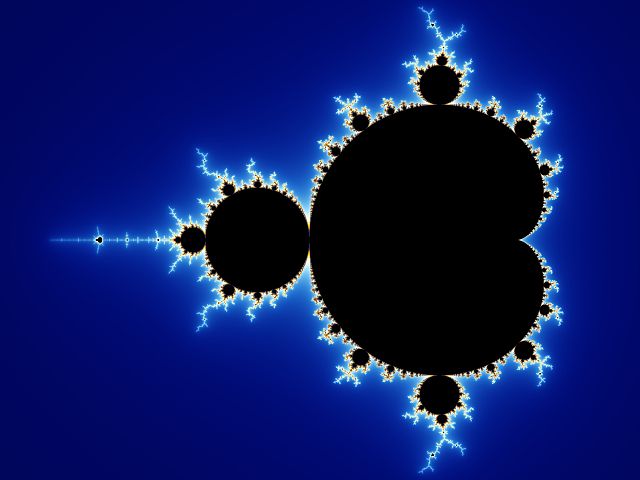
Mathematical Platonism Is True Because it is Useful


I have briefly discussed mathematical Platonism in previous articles. This post is going to contain my current thoughts about it.

Mathematical Platonism is distinct from classic Platonism (so nothing about ideal forms, for instance) and holds that three propositions are true.

1. Mathematical objects exist.
2. Mathematical objects are independent of human beings.
3. Mathematical objects are abstract

Or, in condensed form, mathematical objects exist abstractly and independently of human beings. All possible mathematical objects exist, have always existed and will always exist, even if no mathematician ever ponders them.

In this post, I will argue that while there is no fact of the matter regarding whether mathematical objects exist, it is sensible and useful to treat them as if they do, and that this is enough to justify mathematical Platonism.

Tuesday, 10 September 2013

Dualism is Not a Dirty Word


There are two major flavours of naturalism - methodological naturalism and metaphysical or philosophical naturalism. The former essentially means adopting the attitude that the latter is true as a pragmatic step without actually committing to the view that it is literally so. As such, only metaphysical naturalism is really in need of clarification.

I have already explained on this blog that I am a metaphysical naturalist, and what I think this entails, in particular the distinction between the supernatural and the natural. All too often these are unhelpfully defined simply as antonyms of each other.

To recap briefly on that earlier article, and I think to clarify and expand it in the light of recent thinking on the subject, I propose the following definition:
Naturalism is the view that the physical universe is fundamentally intelligible.
Let's extend this to make a number of other statements which I regard as equivalent or derivable from that basic definition.

(For the purposes of this discussion, a physical phenomenon or effect is an object, event or series of events which could in principle be objectively detected or verified by independent observers.)

In the naturalist view:
  • All physical effects have physical causes
  • All high-level physical phenomena can in principle be described in terms of lower-level physical phenomena
  • The most fundamental, basic level of physical phenomena corresponds to the fundamental laws of physics, which are expressible in terms of mathematics
In my view, this definition rules out libertarian free will, for example, because the decisions of people have physical effects yet libertarians reject any physical, deterministic account of human decision-making.

Most naturalists seem to be physicalists, believing only physical stuff such as matter and energy to exist, and many even think that physicalism is identical to naturalism. It isn't though, and this distrust of the non-physical is partly responsible for an unwarranted contempt for the alternative view - dualism.

Saturday, 2 June 2012

Essential identity: The essence of essence

It seems that we cannot tie the identity of a person to their physical characteristics or to the atoms that make up their bodies. The former cannot be true because we regard physically identical individuals to be distinct people. The latter cannot be true because these atoms are recycled constantly.

It seems identity of people and things may be bound up in some sort of non-physical mystical "essence". If this were not so, Christopher Walken could have just bought another watch for Bruce Willis.


Monday, 28 May 2012

Sunday, 27 May 2012

Essential identity: Physical identity


In continuing the discussion of our intuitive concept of personal identity, I look at ways in which our physical attributes might be the source of our identity.

Saturday, 26 May 2012

Essential identity: Introduction


My last blog post discussed the notion that our intuitions are not trustworthy guides to understanding truths that are outside the bounds of our everyday experience. Relativity shows how our intuitions deceive us as to the nature of space and time, while quantum theory shows us the flaws in our common sense notions of matter and energy.

But there are many other ways in which our intuitions may deceive us. Much has been written about free will and whether this is an illusion (I believe it is). Bruce Hood has recently released a book called The Self Illusion, which argues that what we identify with is not a well-integrated self but a collection of competing drives and subconscious processes.

In this post I will introduce the idea that something is wrong with the very notion of personal identity itself.

Thursday, 3 May 2012

Existence and existence

In my last post, I discussed two different types of beginnings, and in doing so outlined a new way to attack an old problem about the creation of the universe.

In this post, I'm going to talk about two different types of existence. This post isn't going to have any new ideas in it, but I want to write down my take on it anyway because I will be depending on these arguments in future posts.